Wider reading for the dedicated English Literature student with a Faustian thirst for knowledge.

Thursday, 18 December 2014

Y12: Coursework questions to consider

Oh hi Y12,

Firstly, congratulations to our quiz champs (Louis, Charlie, Daniel, Will, Harry and Cameron) - a victory for sheer weight of numbers!

Now, a reminder of your fun holiday homework:


Below is a list of the coursework questions we've put together.

Please follow the instructions above.

At the bottom of the doc, you will find a list of critical opinions about 'The Winter's Tale' from a range of critics. These will give you an insight into some of the debates around the play, and one or two of them might eventually make it into your essay. Here's the doc:


If you find any other useful links, quotes from critics or any other resources, please leave a comment to let me know.

Keep checking back for updates. I'll post any good sites or resources that I find.


Have a good Christmas,


Mr M

Wednesday, 10 December 2014

About Pandosto

Hi,


Robert Greene, who famously referred to Shakespeare as 'an upstart Crow, beautified with our feathers...in his owne conceit the onely Shake-scene in a countrey", wrote the source material for The Winter's Tale.

Here are some links to some info about Pandosto:

The full text - with modern spelling
Pandosto at Wikipedia

It's worth considering the things that Shakespeare changed from the source material. As always, Shakespeare's language transforms the story to create a richness way beyond that of the source. The drama is heightened. It is infused with poetry and comedy.

Often, Shakespeare creates a character who either doesn't exist in the source or is very different - often a show-stealing character. Think Mercutio in Romeo and Juliet. Or, in The Winter's Tale, both Autolycus and Paulina.

Also, throw in a bear and a statue - and you have an infinitely better (and weirder) piece of work.


Mr M


Y12: Where we are

Hi all,


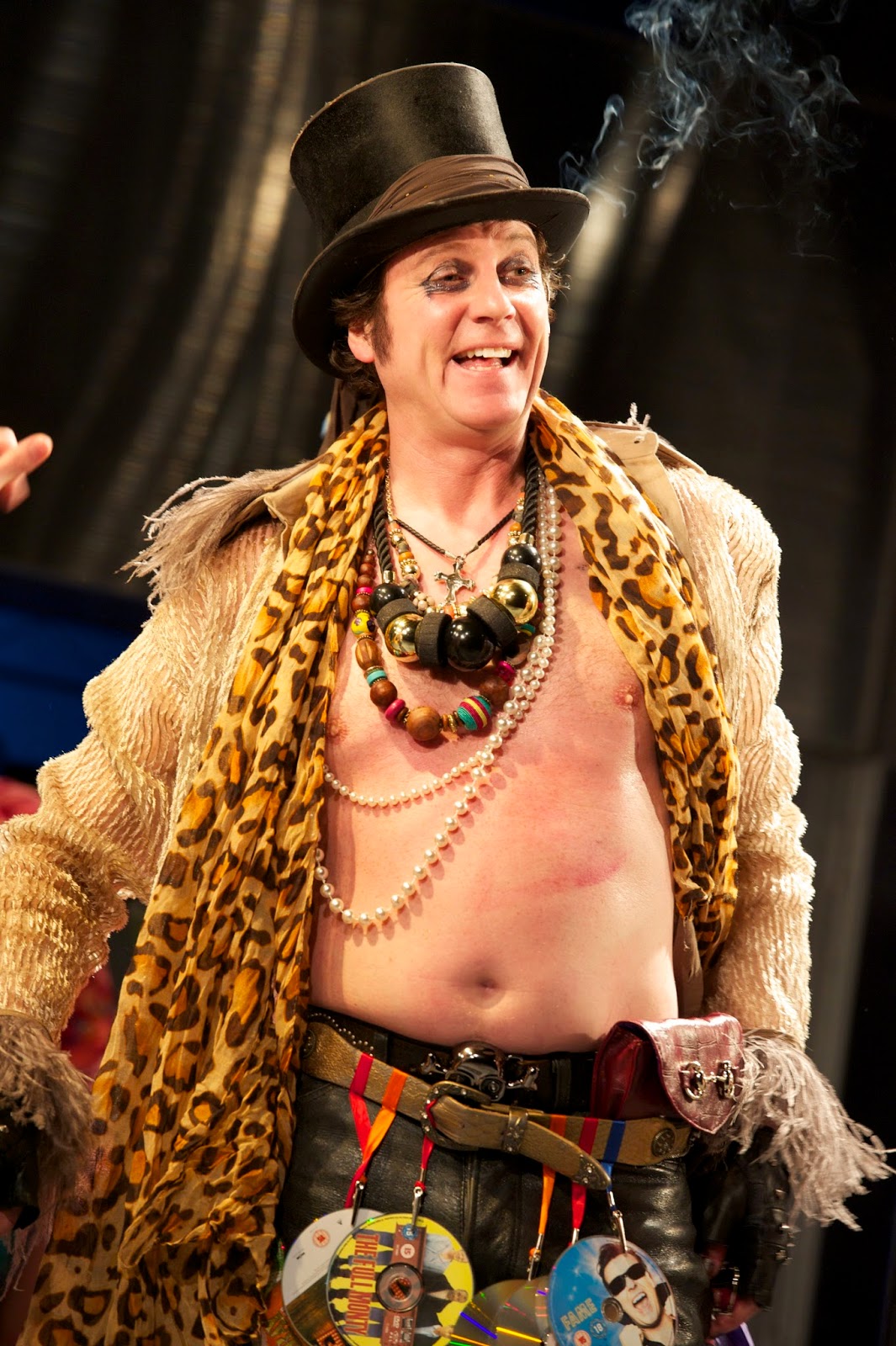
Tony Bell as Autolycus at the Rose Theatre

With only a week and a bit left until Christmas, we really need to motor through to the end of the text. Our priority will be to focus on the aspects of comedy in The Winter's Tale which might make a good focus for an essay question.

Here's our short-term timeline as it see it at this moment:

1) Finish the play by Monday 15th December at the latest. There'll be another quiz!
2) You'll take away a list of coursework questions to brainstorm.
3) In early January, you'll submit a one-page outline essay plan.
4) We'll have some one-to-one discussions to approve your plan.
5) You will write a first draft (under 1500 words) by the end of January.
6) After getting feedback, you will have until after February half term to submit your final draft.

In lessons, we'll be mainly focusing on our novel, The Road, after Christmas. 

Mr M


Monday, 1 December 2014

Act 4 Scene 4: It's epic!

Hi,


Horticultural 'grafting' - a metaphor...
Next lesson, we'll be:

1) Doing a comedy theory quiz
2) Reading five pages of 4.4
3) Preparing to have a go at a short re-creative task based on the scene.

Today, we read a chunk of Act 4 Scene 4 (which is 40 pages long in my edition). To clarify the events and ideas in this long and complex scene, take a look here for a quick and easy summary. The first 21 bullet points take us up to where we are in the scene. Why not have a go at a quiz or two while you're there?

Click the image above to learn more about 'grafting' - then consider the relevance of this idea to the play.

Here's the scene with some helpful marginal notes.

Oops. I also forgot that we were going to go over Time's chorus at the start of Act 4. Keep hold of your notes - we'll do this next week.

Homework reminder:

1) Hand in essay (staging 4.3) on Thursday
2) Revise your comedy theory stuff.


Mr M


Saturday, 22 November 2014

Shakespeare's Verse: An analysis (+ bear pics)

Hi folks,

Here's my effort at the homework.

I have:
  1. Recorded how I'd stress the lines to consider how it fits with iambic pentameter (black)
  2. Looked out for sound effects like internal rhyme, alliteration and assonance (green)
  3. Picked out key images to highlight the tone of the language (orange)
  4. Added a few comments about the effect + interpretations (black)

My overall conclusion from doing this? Well, Cleomenes and Dion are excited, enthusiastic and are positively gushing about their experiences in Delphos. Perhaps this explains the lines with extra syllables. They are not calm and controlled, and this is shown through the variations from the patterns of iambic pentameter. At the same time, it's poetic and musical. The rhymes and semi-rhymes, as well as the use of softer sounds (long vowels, fricatives, sibilance and liquid sounds) create a feeling of dream-like awe and wonder. The language of religion and the heavens helps to bear out this feeling of the sublime, the wonderful.

In other words, there's a connection between form, structure  and style - and subject matter/mood.

Now it's your turn. Don't nick my lines!

As a final present, here's a few of my favourite images of the bear on stage.

Enjoy, 

Mr M


Thursday, 20 November 2014

Y12 Homework: Verse form and *reading around the bear*

Hi folks,

Sorry - we didn't get as far as I wanted today as it seemed necessary to spend more time on Shakespeare's verse form.


As a follow-up to our discussion today, I'd like to set you a short task. Here it is:


1) Pick out 3-4 lines of speech from a character in Act 3 which are rich or interesting in terms of their sound as well as imagery (Paulina in Act 3 Scene 2 is a good choice - or Leontes. In Act 3 Scene 1, Cleomenes and Dion are gushing about their experiences in Delphos - so perhaps poetry and musicality of language can be expected there? Antigonus in 3.3?)


2) Write your lines across a page of A4.


3) Annotate your lines in as much detail as possible, focusing on:


  •    stressed and unstressed syllables
  • rhyme/half-rhymes
  • alliteration (and sibilance) and assonance
  • punctuation and the flow of the verse
In addition, consider how word choices and imagery enhance the effects of the tone created through sound.

If you need help, here are a few things to get you thinking...

First, my powerpoint from today:


Also, have a look at this video in which actors playing Macbeth and Lady Macbeth discuss the effect of iambic pentameter on their performances:

If you are still not sure, I'll do one of my own and post it here tomorrow so you can see what I'm after.

I'd also encourage you to consider interpretations of the bear and its impact. Here are a couple of places to start:

Thursday, 6 November 2014

The Oracle at Delphi

Hi,
 
Consulting the Oracle by John William Waterhouse

I wanted to point you in the direction of further information about one of the classical references in The Winter's Tale: the Oracle at Delphi. Here, I mean classical in the sense of 'pertaining to Greek and Roman antiquity, especially with reference to literature and art'. The presence of the Oracle in the play puts it in a pre-Christian, pagan setting - despite some anachronistic Christian references.

Check out this link for more about the Delphian Oracle:

http://en.wikipedia.org/wiki/Oracle

Or if you want to dig deeper:

http://www.shakespeareoxfordfellowship.org/wp-content/uploads/Oxfordian2007_Showerman-Death.pdf

Finally, a rich understanding of classical mythology can really help you to develop a deeper understanding of Shakespeare's plays. If you're interested in the classical world or ancient myths, check out one of Shakespeare's favourites: Ovid's Metamorphoses.
Also great: Ted Hughes's Tales from Ovid. 


Mr M